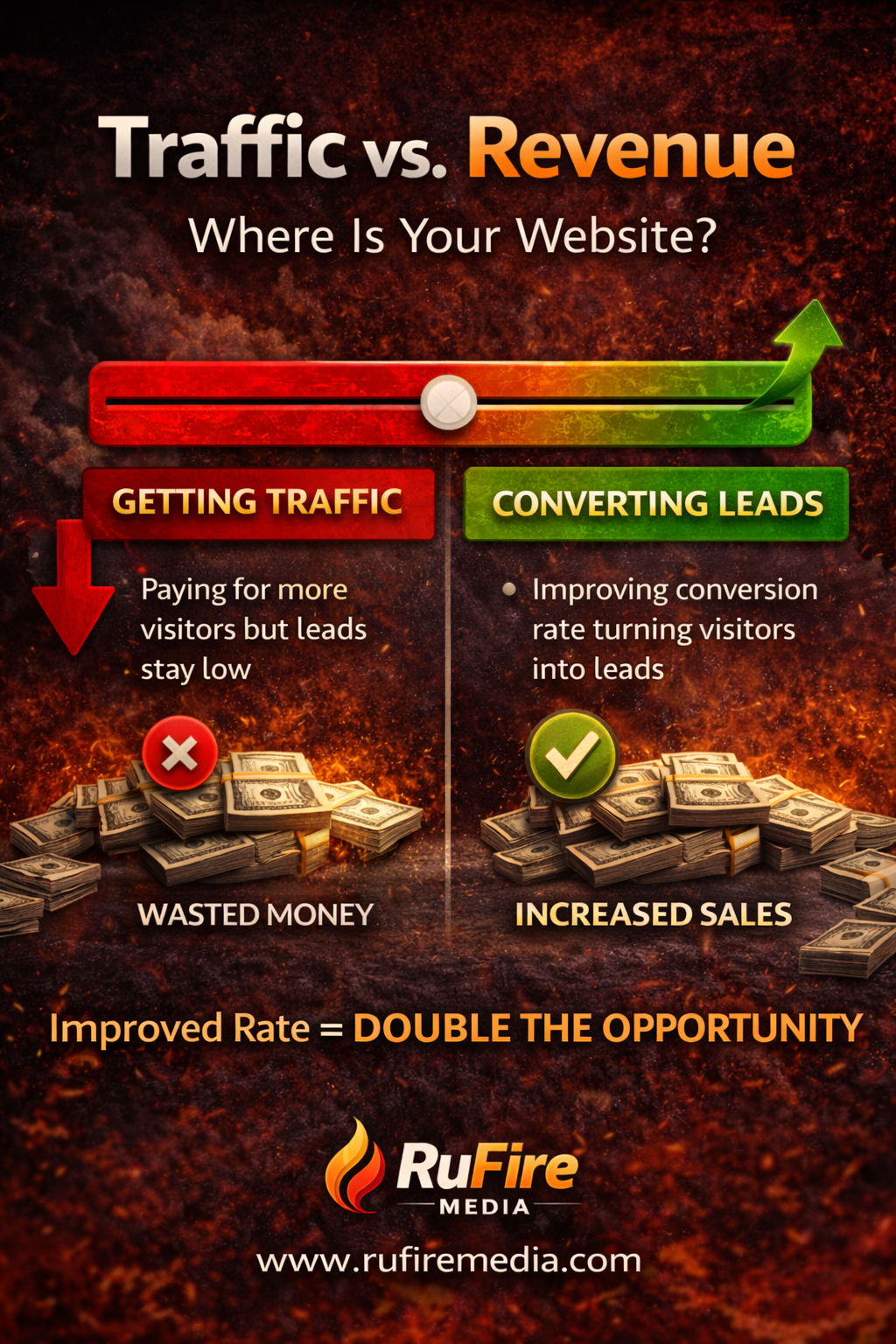
How Many Follow-Ups Does It Take to Close a Lead? (And Why Most Businesses Quit Too Early)
Most sales don’t happen on the first call — but most businesses stop before they ever had a real chance.

How Many Follow-Ups Does It Take to Close a Lead?
Most business owners believe that if a customer doesn’t respond after the first call or message, they’re not interested.
So they move on.
No second call.
No follow-up text.
No reminder.
No system.
And just like that, the opportunity is gone.
But research shows something very different.
Most sales don’t happen on the first contact — and stopping early is one of the biggest reasons businesses lose revenue.
The Data: Most Sales Require Multiple Follow-Ups
Multiple studies across sales and customer behavior show a consistent pattern.
- The National Sales Executive Association reports that 80% of sales require 5 or more follow-ups
- Many businesses stop after 1 or 2 attempts
- A large percentage of leads are never contacted again after the initial attempt
Research from HubSpot and Salesforce also shows that consistent follow-up dramatically increases conversion rates.
This means the problem isn’t always the lead.
It’s what happens after the first contact.
Most Businesses Quit Too Early
Here’s what typically happens in a home service business:
- Lead comes in
- One call is made
- Maybe a voicemail is left
- No answer
- Lead is marked as “not interested.”
But in reality, the customer may have been:
- At work
- Driving
- Talking to another company
- Busy with family
- Waiting to compare options
Not answering does NOT mean they are not interested.
It often just means the timing didn’t work.
The Follow-Up Gap = Lost Revenue
Let’s look at a simple example.
Contractor receives:
- 100 leads per month
- 30% don’t respond to the first call
- No structured follow-up
That’s 30 leads that may never be contacted again.
If even 20% of those could have turned into jobs:
30 × 20% = 6 jobs lost
If the average job is $3,000:
6 × $3,000 = $18,000 per month
That’s over $200,000 per year in lost opportunity — simply from not following up.
And most businesses never even realize it.
Customers Often Buy After Multiple Touches
Studies on buying behavior show that customers rarely make decisions immediately.
Research from RAIN Group shows that buyers often:
- Compare multiple companies
- Take time to decide
- Respond after repeated contact
- Choose based on consistency and professionalism
This means:
👉 The company that follows up consistently often wins
👉 Not necessarily the cheapest
👉 Not necessarily the most experienced
👉 Just the one that stays present
Why Follow-Up Fails in Most Businesses
Most businesses don’t fail at follow-up because they don’t care.
They fail because they don’t have a system.
Common issues include:
- Leads get lost in the shuffle
- No reminders to follow up
- Staff gets busy
- Calls are forgotten
- No tracking of attempts
- No consistency
As lead volume increases, the problem gets worse.
More leads = more opportunities to drop the ball.
One Call Is Not a Process
Many companies treat follow-up like a one-time task.
But in reality, it’s a process.
A real follow-up process might include:
- Initial call
- Second call attempt
- Follow-up text
- Email reminder
- Another call
- Additional touch points over time
Businesses that follow a structured process consistently outperform those that rely on memory.
The Businesses That Win Do This Differently
Companies that consistently close more leads:
- Follow up multiple times
- Use multiple communication channels
- Stay consistent without being pushy
- Keep leads engaged
- Don’t rely on “I’ll remember to call them later.”
They don’t necessarily get more leads.
They just convert more of the ones they already have.
Why This Problem Is Getting Worse
Customer behavior has changed.
People are:
- Busier
- More distracted
- Comparing more options
- Expecting faster responses
- Less likely to respond immediately
At the same time, many businesses are still using:
- Manual follow-up
- Sticky notes
- Memory-based systems
- One-and-done call attempts
The gap between customer behavior and business processes keeps growing.
And that gap is where revenue disappears.
How Businesses Are Fixing the Follow-Up Problem
Companies that want to capture more revenue are using systems that:
- Automatically follow up with leads
- Send reminders and messages
- Track every interaction
- Ensure no lead gets forgotten
- Stay consistent without adding more workload
These systems don’t replace your team.
They support it.
And they make sure every opportunity gets a real chance to convert.
Final Thoughts
Most businesses don’t lose leads because the leads are bad.
They lose them because they stop too early.
Research shows that most sales require multiple follow-ups, yet many businesses never go beyond the first or second attempt.
If your company is generating leads but not converting as many as expected, the problem may not be marketing.
It may be what happens after the first call.
Contact us to get your follow-up system in place
If you want to see how your follow-up process compares,
RuFire Media can review your current lead handling, response time, and follow-up system to help identify where opportunities may be slipping through.
Most businesses are surprised by how much revenue is sitting in leads they already have.
Ready to work with RuFire Media?
Let's connect! We’re here to help.
Send us a message and we’ll be in touch.
Or give us a call today at 813-536-3942
Agency Contact Form
More Marketing Tips, Tricks & Tools


Google Isn’t Your Only Customer Anymore: How AI Is Deciding Who Gets the Call (And Who Gets Ignored)